
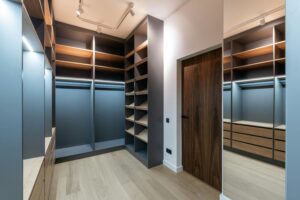

Storage Solutions to Maximize Space in Reach-in Closets
OUR REACH-IN CLOSET GALLERY
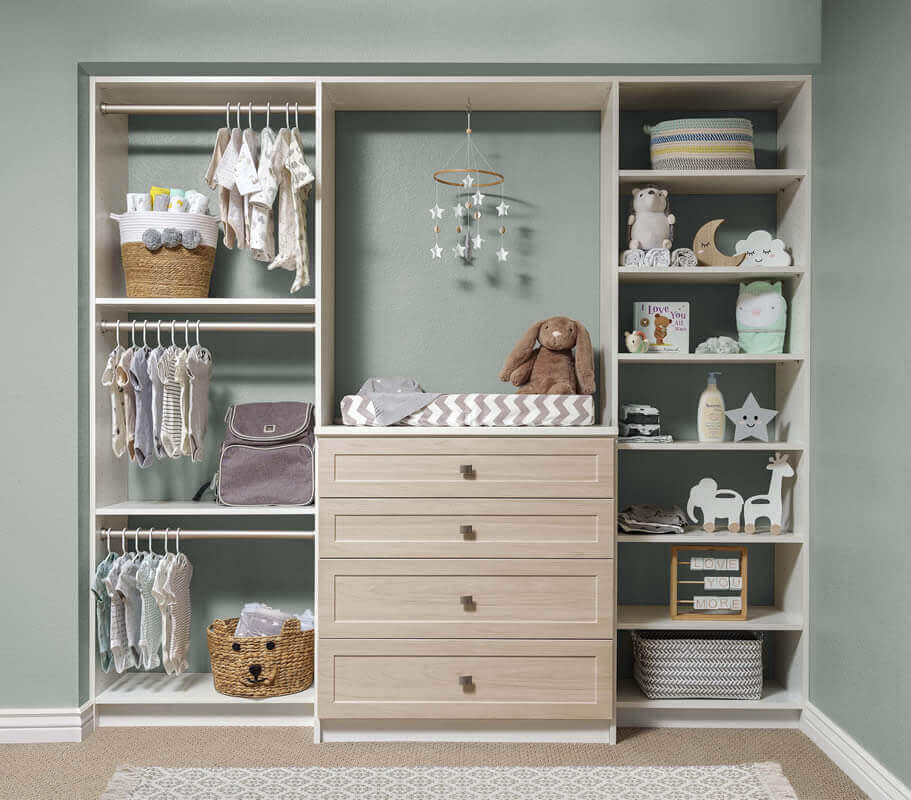
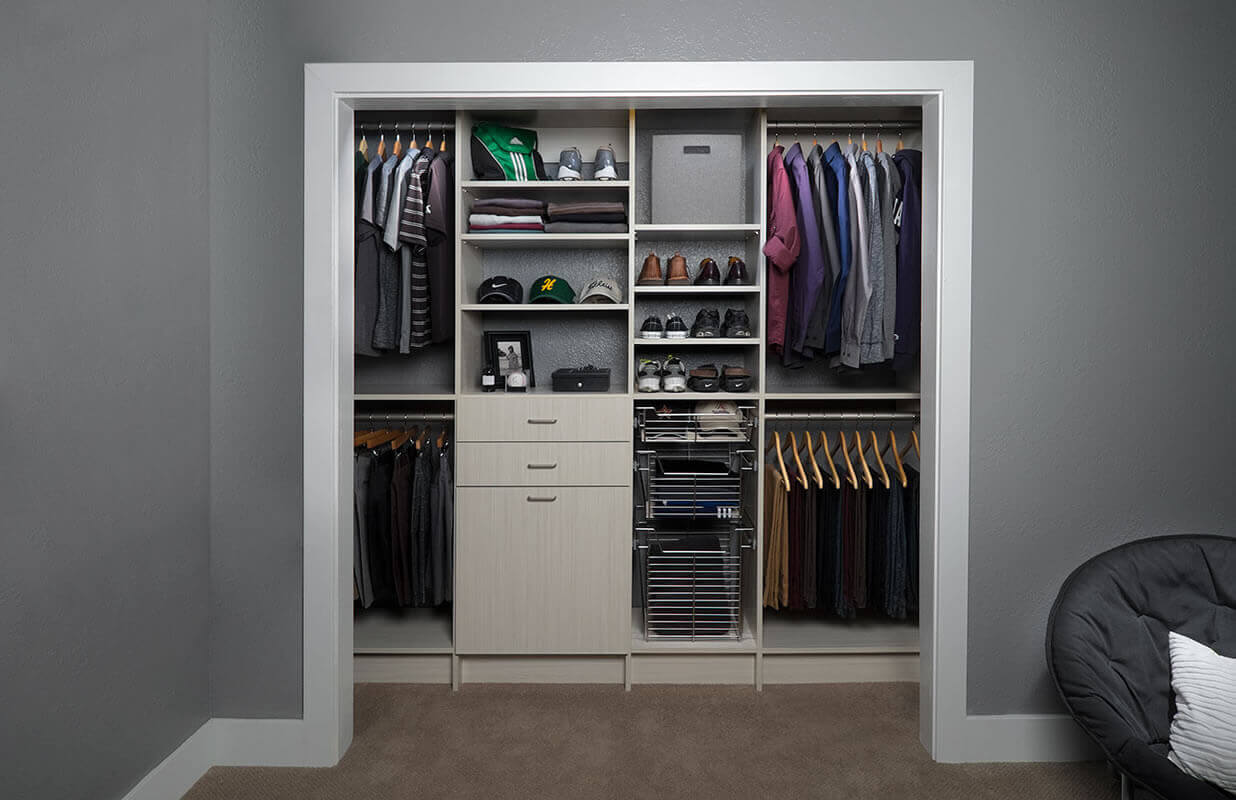
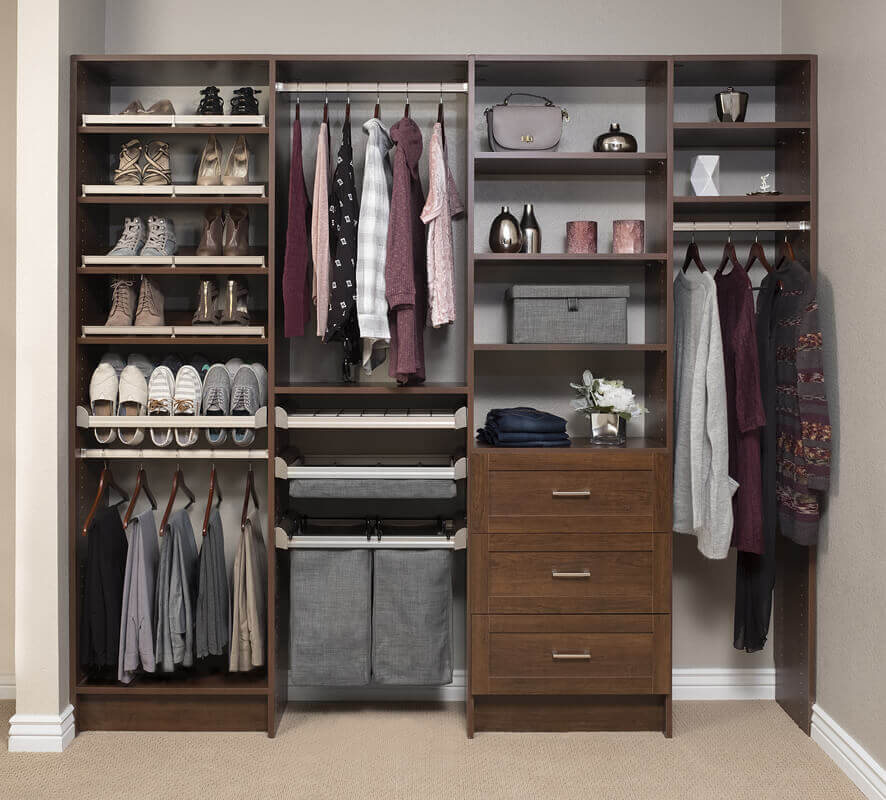
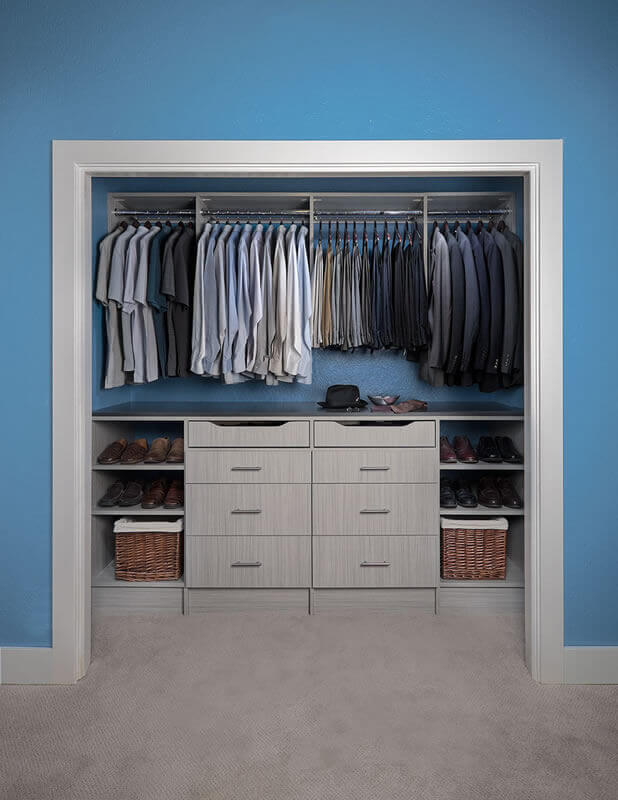
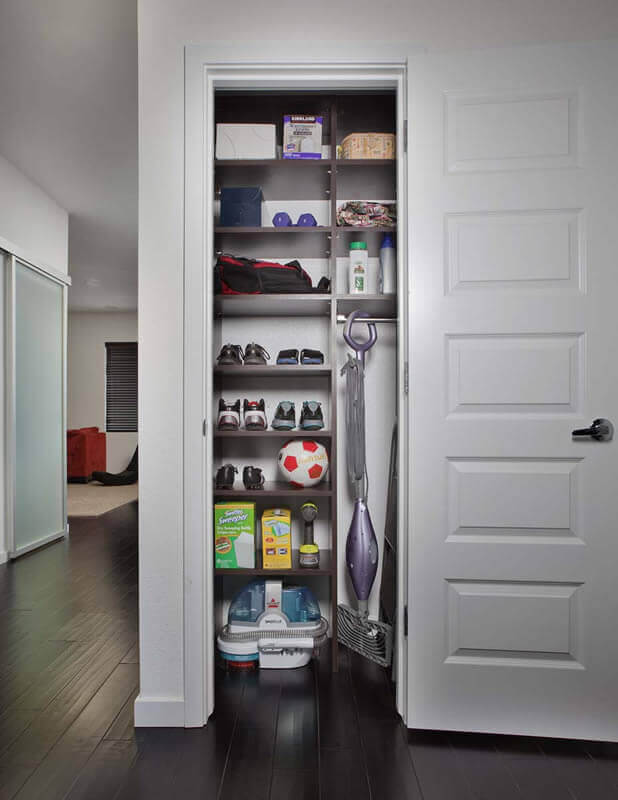
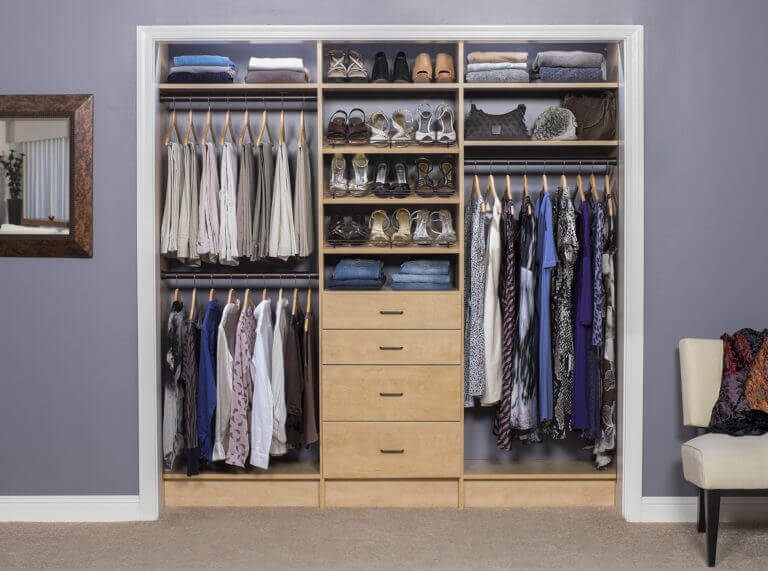
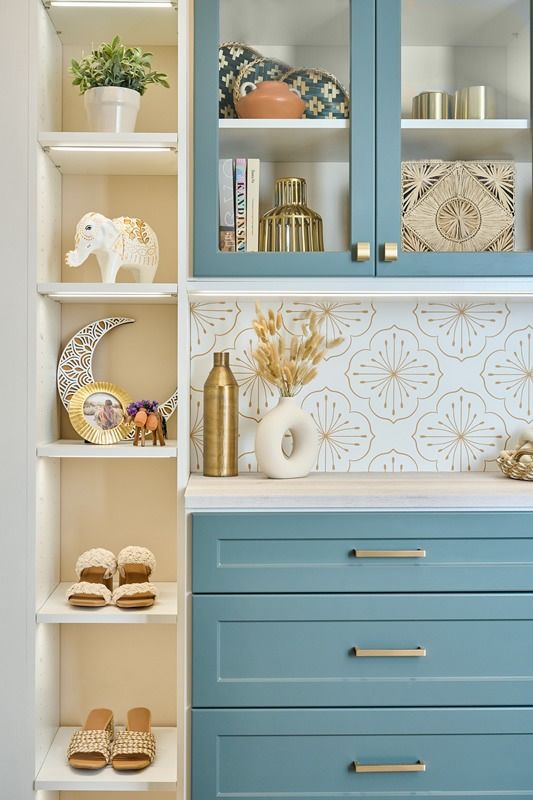
The Closet Shop: Atlanta’s full range of Atlanta closet and storage services. Here, we focus specifically on the reach-in — the most common and most underserved closet format in Atlanta homes.
Atlanta’s housing stock presents a specific challenge that no national closet chain is engineered to solve: the reach-in closets found in Virginia-Highland bungalows, Buckhead mid-century ranches, and the pre-war craftsmen near Chastain Park were built to a standard that made sense in 1948. They were not designed for a wardrobe that includes tailored suits, designer handbags, and a curated shoe collection. The walls are rarely plumb. The ceiling heights vary. The depth is a fixed 24 inches, and every fraction of that depth matters. We design and install custom-built-ins that work within those exact constraints, not around them.
THE PROBLEM WITH STANDARD REACH-IN CLOSETS IN ATLANTA HOMES
Standard reach-in closets in Atlanta’s older housing stock are engineered for volume, not function. A single chrome rail and a shelf above it cannot accommodate the wardrobe of a Buckhead homeowner — and it certainly cannot protect it.
Wire rack systems — the builder-grade default installed in the majority of Atlanta homes built before 2005 — create three compounding problems. First, they distribute weight unevenly across drywall anchors rather than the home’s structural framing, making them prone to failure under the load of a serious wardrobe. Second, they offer no micro-zoning: long-hang garments pool, folded items topple, and shoes migrate across the floor. Third, they impose visual chaos on a space you enter twice daily. The result is a closet that works against your morning rather than supporting it.
The custom reach-in systems we build for Atlanta homes are anchored directly into wall studs and framing — not drywall. They are designed to the millimeter of your specific closet’s dimensions. And they eliminate the visual noise that wire racks produce, replacing it with composed, boutique-style cabinetry that looks as though it was always part of the home.
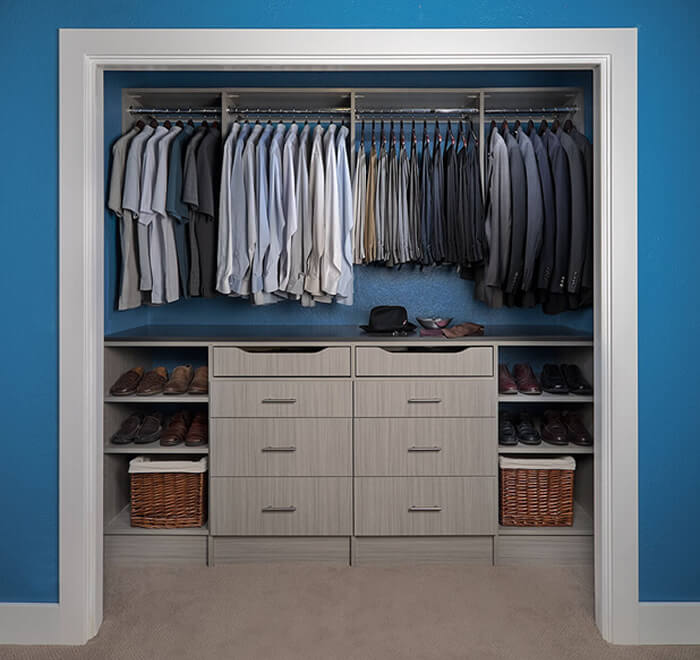
CUSTOM WALK-IN CLOSET SERVICES DESIGNED FOR ATLANTA’S SPECIFIC HOMES:

A REACH-IN CLOSET TRANSFORMATION IN VIRGINIA-HIGHLAND
Last fall, we completed a reach-in closet installation in a 1940s craftsman bungalow in the Virginia-Highland Historic District. The home had been renovated extensively, but the primary bedroom closet remained original: a single chrome rail, one shelf, and walls that measured out-of-plumb by nearly three-quarters of an inch from floor to ceiling. The existing wire rack had pulled partially free from the wall — a predictable failure for a system relying on drywall anchors in a plaster-over-lathe wall assembly.
Our team mapped the framing, scribed the side panels to the out-of-plumb walls, and anchored the full cabinetry system directly into the original 2×4 framing. The finished system included a double-hang zone for the homeowner’s dress shirts and blazers, a long-hang section for her formal pieces, adjustable shelving for folded knitwear, and a dedicated lower zone for twelve pairs of shoes — each pair visible, accessible, and stored flat. The installation was complete in a single day. The homeowner’s words: “It looks like it was built with the house.”
The Engineering Behind a Custom Reach-In Closet
A well-designed reach-in closet is not a shelving project — it is a structural and spatial engineering problem.
Load Distribution and Structural Anchoring
The wire rack systems found in most Atlanta reach-in closets rely on drywall anchors — fasteners that are not designed to bear the sustained weight of a full wardrobe. A single rail loaded with winter coats, suits, and formal wear can exceed 200 pounds. Drywall anchors, even quality ones, are not rated for that load over time.
Our custom built-ins are anchored directly into the wall framing — the same structural members your home’s walls are built around. This means the weight of your wardrobe is transferred through the cabinetry into the home’s skeleton, not into the drywall surface. For Atlanta’s older homes, where walls may have been patched, modified, or built with non-standard stud spacing, we locate and map every stud before a single panel is installed.
Micro-Zoning a 24-Inch Depth
The standard reach-in closet is 24 inches deep. Every inch of that depth is recoverable — if the zones are designed correctly.
The most common waste in a reach-in closet is vertical: a single long-hang zone that consumes the full height of the closet to accommodate one category of garment, leaving the remaining wardrobe to compete for whatever rail space remains. Proper micro-zoning divides the closet vertically and horizontally into purpose-built territories. Long-hang sections — for dresses, robes, and formal trousers — are allocated exactly the height they require: typically 60 to 66 inches of clear drop. Everything above that threshold becomes a second functional zone: double-hang for shirts and jackets, or adjustable shelving for folded items, bags, and accessories.
The result is a closet that holds two to three times the wardrobe of a wire rack system in the same physical footprint.
Climate, Ventilation, and Textile Preservation
Enclosed reach-in closets in Atlanta’s humid subtropical climate require intentional airflow design to protect high-end garments.
Atlanta’s summers are not abstract. The combination of high ambient humidity and the sealed environment of a reach-in closet — particularly in older homes without dedicated HVAC registers in closet spaces — creates conditions that accelerate fabric degradation, encourage mildew on natural fibers, and cause leather goods to develop moisture damage. The custom systems we build incorporate breathable panel spacing, avoid over-compressed hanging zones, and use materials that do not off-gas or trap moisture against garments. For clients with significant collections of tailored pieces, leather goods, or luxury knitwear, we design the hanging zones to maintain airflow between garments rather than compressing them into a dense block.
Permit and Compliance Information for Atlanta Reach-In Closet Installations
Custom reach-in closet built-ins in Atlanta are generally classified as interior finish work and do not require a building permit when no structural modifications, electrical work, or plumbing are involved.
For installations that incorporate integrated lighting — particularly hardwired LED systems — the City of Atlanta’s Office of Buildings requires an electrical permit pulled through [DATA NEEDED: link to City of Atlanta Office of Buildings permit portal]. All electrical work performed as part of a reach-in closet installation must be completed by a licensed electrician and is subject to inspection by the City of Atlanta’s inspection division.
For reach-in closets where no electrical work is involved — the majority of our installations — no permit is required under the City of Atlanta’s current residential finish work guidelines. We confirm this scope with every client during the design consultation, so there are no surprises before installation day.
OUR INSTALLATION PROCESS FOR ATLANTA REACH-IN CLOSETS
Step 1 — Design Consultation and Precision Measurement
We begin with a design consultation at your Atlanta home. Our designer measures the exact dimensions of your reach-in closet — including ceiling height, wall plumb, floor level, and the location of any existing electrical outlets, light fixtures, or HVAC registers. For homes in the Virginia-Highland Historic District or Buckhead’s older residential corridors, we specifically document wall irregularities and any architectural features — baseboards, crown, chair rail — that the new system must integrate with seamlessly. You leave the consultation with a rendered design and a fixed price.
Step 2 — Fabrication and Pre-Installation Preparation
Your system is custom-fabricated to the exact measurements taken during the design consultation. Before our installation team arrives, we ask that the closet be cleared of its contents — we provide guidance on how to stage items in an adjacent room to minimize disruption. Our team arrives with all panels, hardware, and installation materials pre-staged. We lay protective floor coverings over your hardwood or tile and mask adjacent trim before any work begins.
Step 3 — White-Glove Installation and Final Detailing
Installation is typically complete in a single day. Our team anchors the cabinetry into your home’s structural framing, levels every component, and applies all finish details — including any integrated lighting, pull-out accessories, or specialty hardware. Before we leave, we vacuum, wipe down all surfaces, and remove every piece of packaging and debris. The space we leave behind is cleaner than the one we arrived in. Your system is backed by a lifetime guarantee.
SERVING ATLANTA’S MOST DISTINCTIVE NEIGHBORHOODS
The Closet Shop Atlanta designs and installs custom reach-in closets throughout Atlanta and the surrounding metro.
Our installation teams are regularly working in Buckhead Village, the Virginia-Highland Historic District, the neighborhoods surrounding Chastain Park, and the residential streets of the 30305 zip code. We also serve Brookhaven, Sandy Springs, Decatur, Vinings, and East Cobb — the full Atlanta metro footprint visible in our service area.
Each of these neighborhoods presents its own architectural context. The homes near the Atlanta Botanical Garden in Midtown tend to be mid-century construction with standard stud framing. The bungalows of Virginia-Highland are often plaster-over-lathe with non-standard stud spacing. The newer construction in Buckhead’s gated communities may have larger closet footprints but benefit equally from intentional micro-zoning. We design for the specific home in front of us — not a template.


CUSTOMIZE AND MAXIMIZE
You have numerous options to customize Reach-in Custom Closet Cabinets and thereby maximize the benefits. These cabinets are made from high-class materials which will ensure their beauty is coupled with longevity so that you may enjoy them for a long time to come.
You can customize Reach-in Closets with space-saving and convenient features such as top-grade hanging rods, sliding revolving mirrors, tile-out hampers, and slide-out racks for scarves, belts and ties.
FREQUENTLY ASKED QUESTIONS ABOUT CUSTOM REACH-IN CLOSETS IN ATLANTA
How do custom-built-ins handle the out-of-plumb walls common in older Atlanta homes?
Atlanta’s pre-war housing stock — particularly the craftsman bungalows in Virginia-Highland and the older homes near Chastain Park — was built before modern framing standards. Walls in these homes frequently measure three-quarters of an inch or more out of plumb from floor to ceiling. Our designers account for this during the precision measurement phase: side panels are scribed to the actual wall angle, and all horizontal components are leveled independently of the wall surface. The result is a system that appears perfectly composed even when the walls behind it are not.
What is the structural difference between floor-based cabinetry and a wall-hung rail system in a reach-in closet?
Wall-hung rail systems — the standard configuration for most builder-installed wire rack systems — transfer all load through drywall anchors into the wall surface. This works adequately for light loads but fails progressively under the weight of a serious wardrobe, particularly in Atlanta’s older plaster-over-lathe walls, where anchor holding strength is lower than in modern drywall. Floor-based cabinetry distributes load through the cabinet structure into the floor, with wall anchors used for lateral stability into the framing — not as the primary load-bearing connection. For Atlanta homeowners with extensive wardrobes, floor-based systems are the structurally correct choice.
How can I integrate lighting into my reach-in closet without hardwiring new electrical lines?
The most practical solution for reach-in closets in Atlanta homes where running new electrical is not feasible — or where a permit is not desired — is LED tape lighting or puck lighting powered by a low-voltage transformer plugged into an existing outlet. These systems can be integrated into the underside of shelves and the top of hanging sections, providing even illumination across the full closet without any hardwiring. For clients who want hardwired lighting, we coordinate with a licensed Atlanta electrician who pulls the appropriate permit through the City of Atlanta’s Office of Buildings before any electrical work begins.
What materials are best for protecting high-end garments in Atlanta’s humid climate?
Atlanta’s humid subtropical climate — with average summer relative humidity consistently above 70% — makes material selection in a reach-in closet a genuine textile preservation decision. We specify materials that do not off-gas VOCs, do not absorb and retain moisture, and provide stable surfaces that will not warp or delaminate under seasonal humidity swings. Thermally fused laminate panels on a moisture-resistant substrate are the standard specification for our Atlanta installations. For clients with significant leather goods or natural fiber collections, we also design hanging zones with deliberate spacing between garments to maintain airflow and prevent the moisture accumulation that accelerates fabric degradation.
How much vertical space needs to be allocated for long-hanging garments so they don’t pool on the floor?
For standard reach-in closets with 8-foot ceiling heights — the most common configuration in Atlanta’s mid-century and newer construction — long-hang sections require a minimum of 60 inches of clear drop from the rod to the floor to accommodate full-length dresses and formal trousers without contact. For homes with lower ceiling heights, as occasionally found in Virginia-Highland’s original bungalow stock, we adjust the rod height and may recommend a shorter long-hang section paired with an expanded double-hang zone to recover the vertical capacity. Every system we design is calculated to the specific ceiling height and door header of your closet.
Is a custom reach-in closet covered under The Closet Shop Atlanta’s standard design consultation, or is it billed separately from a walk-in closet project?
A custom reach-in closet is a fully independent project with its own design consultation, measurement, fabrication, and installation. It is not a sub-component of a walk-in closet engagement. If your home has both a primary walk-in and secondary reach-in closets — a common configuration in Buckhead homes with guest suites — we can design and install both systems under a coordinated project timeline, with a single design consultation covering all spaces. Our Atlanta walk-in closet and unique storage spaces services follow the same white-glove process.