

Custom Pantry Solutions
OUR PANTRY GALLERY
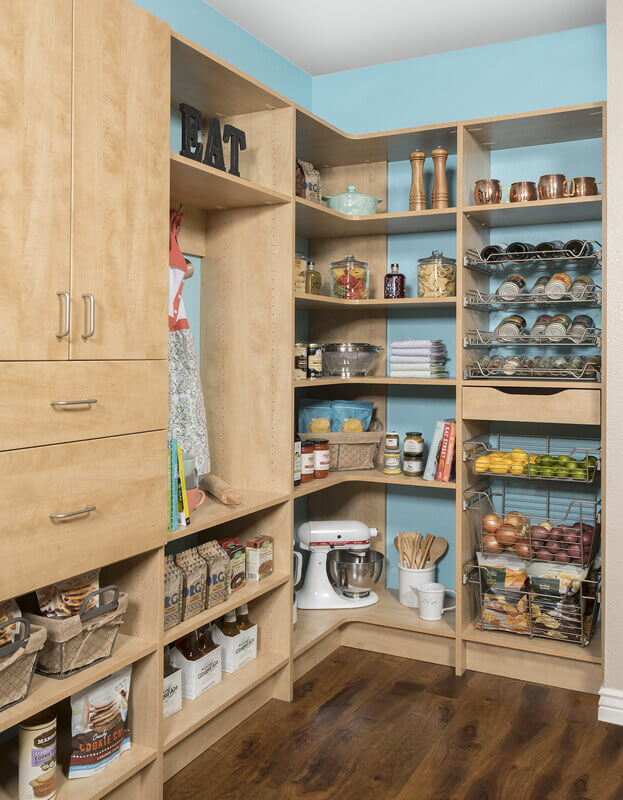
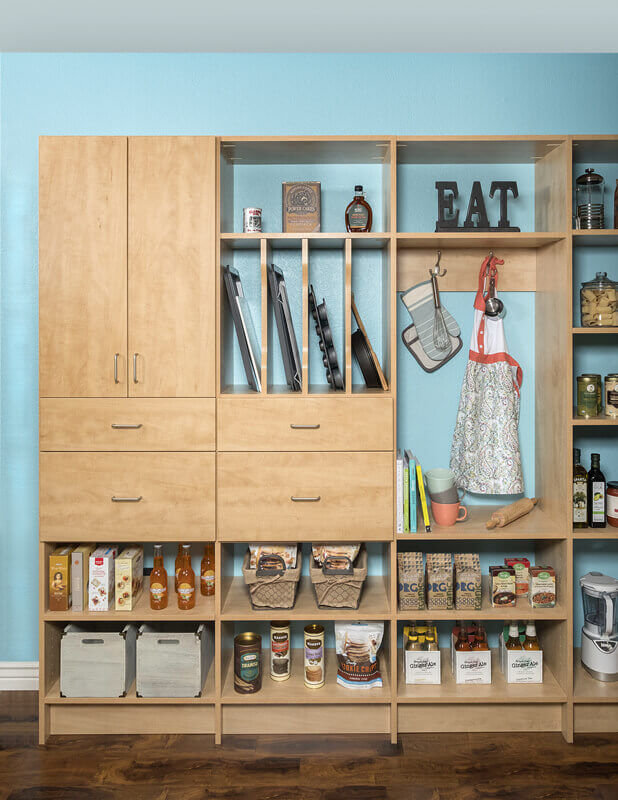
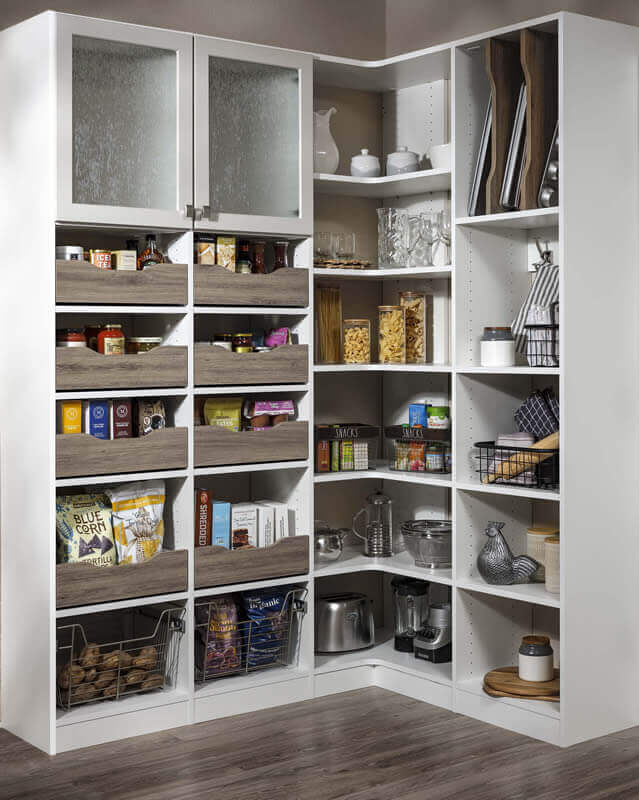
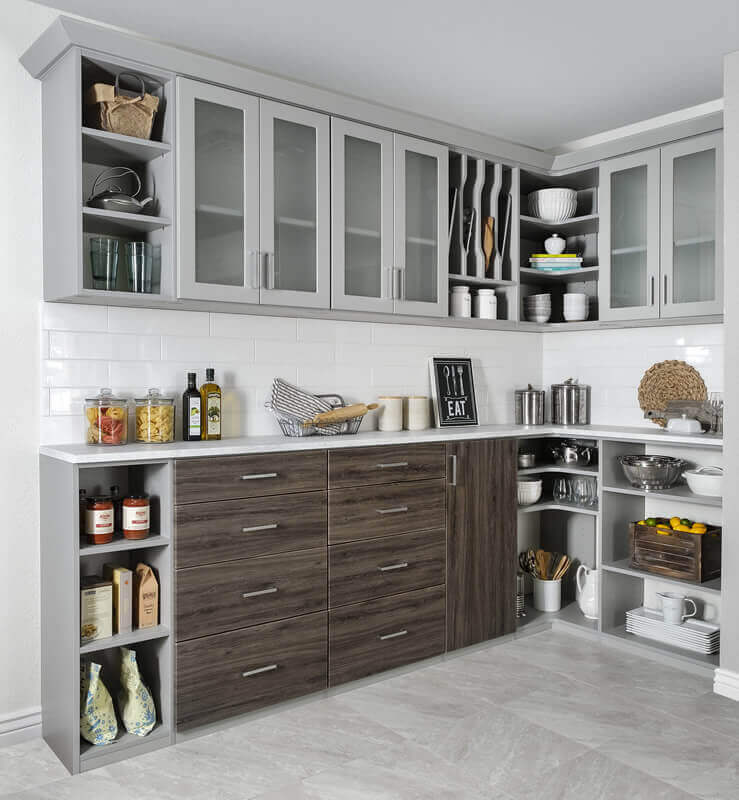
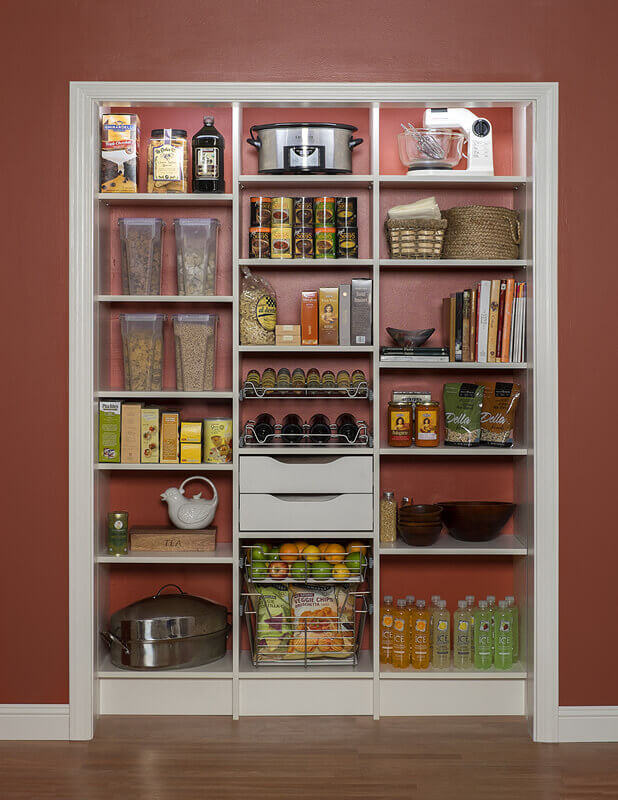
Atlanta’s builder-grade wire racks don’t belong in a luxury kitchen. Here’s what does.
Atlanta’s most beautifully designed homes — from the pre-war estates of Tuxedo Park to the restored craftsman bungalows of Virginia-Highland — share a common blind spot: the kitchen pantry. Builders finish everything else to spec and leave a wire rack bolted to a painted box. The result is visual noise that undermines every other design decision in the room.
As part of The Closet Shop Atlanta’s full range of Atlanta custom storage services, this page focuses specifically on custom kitchen pantry design — the engineering, the materials, the ergonomics, and the white-glove installation process that leaves your kitchen calmer and more functional than it’s ever been. The Closet Shop Atlanta designs and installs custom kitchen pantry systems built to the specific demands of Atlanta homes. Schedule your complimentary design consultation.
WHY ATLANTA KITCHENS DEMAND A DIFFERENT APPROACH TO PANTRY STORAGE
Atlanta’s housing stock creates pantry challenges that off-the-shelf solutions simply cannot solve. The city’s wide range of home architectures — from the soaring ceilings of Buckhead’s grand Colonials to the compact, thoughtfully scaled footprints of Inman Park’s Victorian row homes — means no two pantry projects begin from the same starting point.
In the high-rise condominiums rising along Peachtree Road in Buckhead, vertical cubic volume is the entire game. Standard static shelving wastes the upper two feet of every reach-in pantry, leaving prime real estate inaccessible. In the older craftsman homes near Ponce City Market, the pantry is often a converted coat closet with irregular depth — a space that punishes fixed shelving and rewards full-extension pull-out systems that bring every item to the front without requiring the homeowner to excavate the back wall.
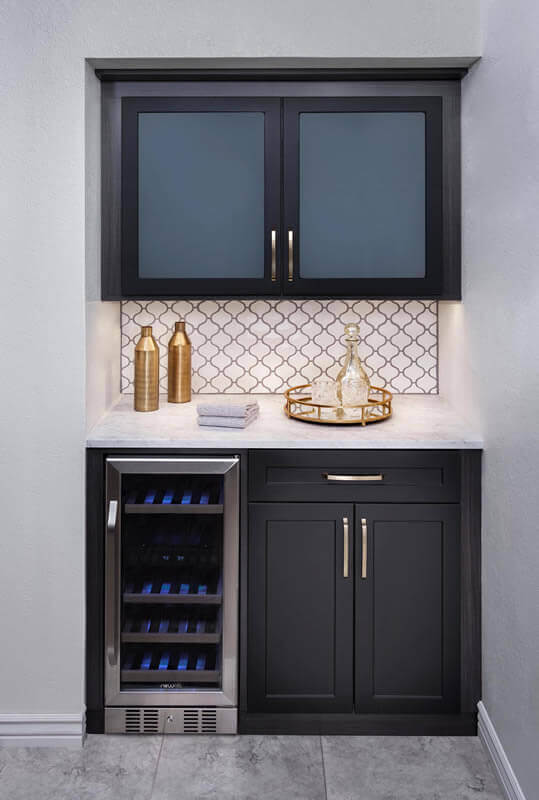
Atlanta’s climate adds a layer of complexity most pantry installers ignore. The city’s humid subtropical summers — with sustained heat and humidity that routinely push into the upper 90s from June through August — create a real challenge inside enclosed pantries that house heat-generating appliances. A coffee maker, a countertop microwave, or a wine cooler tucked into a sealed built-in without adequate airflow degrades food shelf life, accelerates finish wear on cabinetry, and creates condensation cycles that compromise the structural integrity of standard MDF shelving over time.
Every custom kitchen pantry system The Closet Shop Atlanta installs is designed with these conditions in mind.
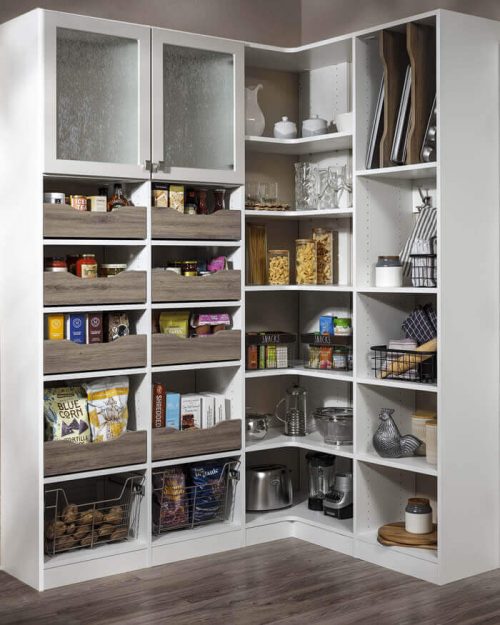
CUSTOM KITCHEN PANTRY SERVICES WE DELIVER ACROSS ATLANTA:
A CUSTOM PANTRY PROJECT IN VIRGINIA-HIGHLAND
Last year, The Closet Shop Atlanta completed a full pantry conversion in a 1940s craftsman home near Ponce City Market in Virginia-Highland. The existing space was a former coat closet — 24 inches deep, 36 inches wide, with a ceiling height of 102 inches — that had been fitted with three fixed wire shelves at the time the home was purchased.
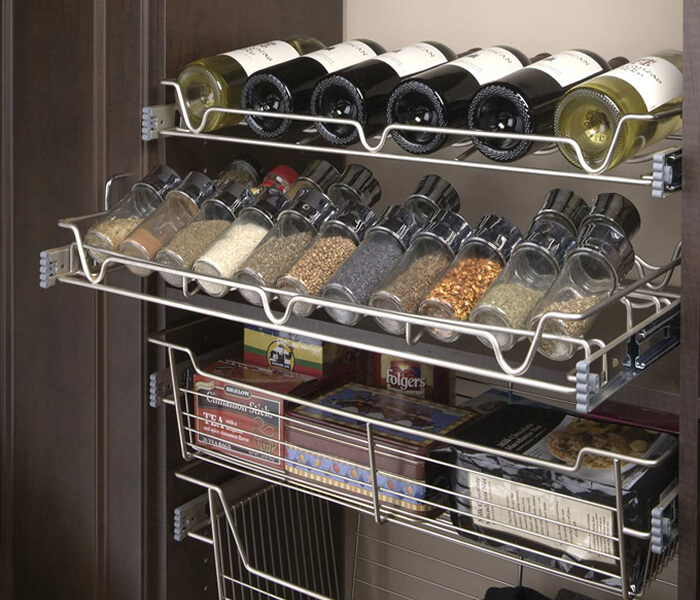
The challenge was depth. At 24 inches, standard static shelving puts everything at the back of the cabinet out of reach without full visibility. The solution was a full-extension pull-out system: three double-drawer pull-outs at the base for heavy canned goods and cast iron, two mid-height pull-outs for daily dry goods, and a fixed upper zone with a custom-fitted spice rack and door-mounted organizer panels.
The commercial-grade core panels were specified in a warm white finish matched to the existing kitchen cabinetry. The installation was completed in a single day. The homeowner’s morning routine — previously built around excavating the back of wire shelves — was replaced with a system where every item has a defined place and is visible from the door.
ERGONOMIC ZONING: THE MATHEMATICS OF A PANTRY THAT WORKS
A well-designed pantry is not just organized — it is ergonomically calibrated. The placement of every zone is a deliberate decision, not a default.
Heavy appliances — stand mixers, blenders, food processors — belong at or near waist height. Storing them at floor level requires a full squat under load. Storing them overhead creates a safety hazard when they need to be moved. The Closet Shop Atlanta’s design consultants establish the correct appliance zone height based on the primary user’s ergonomic profile during the initial consultation.
Dry goods, canned goods, and daily essentials are zoned at natural reach height — between hip and shoulder — where visibility is clear, and retrieval is effortless. Bulk items, seasonal equipment, and rarely used pieces are assigned to the upper vertical zones, keeping the most-used items accessible without any searching.
The result: every morning, the items you need are exactly where you expect them. The pantry stops being a place you search and becomes a system you trust.
THE ENGINEERING BEHIND A PANTRY THAT HOLDS ITS SHAPE
Standard MDF shelving bows. On spans wider than 36 inches, the cumulative weight of canned goods, cast iron, and small appliances causes standard medium-density fiberboard to deflect measurably within 18 to 24 months. For Atlanta homeowners who have invested in a luxury kitchen, watching a pantry shelf sag under the weight of a Le Creuset collection is not an acceptable outcome.
The Closet Shop Atlanta builds with commercial-grade thermally fused laminate panels and reinforced core materials specifically chosen for their load-bearing performance across wide spans. These are not the same materials available at a home improvement warehouse. The structural difference is not cosmetic — it determines whether your pantry looks as precise in year seven as it did on installation day.
Heavy-duty soft-close undermount glides are the other half of this equation. A full-extension pull-out drawer loaded with canned goods and cast iron is a significant mechanical load. Consumer-grade slides fail under that weight over time — they bind, they drop out of alignment, and they require force to open and close. The undermount glide systems The Closet Shop Atlanta specifies are rated for sustained loads that match the real-world demands of a working kitchen pantry. The drawer glides effortlessly, even when full.
MATCHING ATLANTA’S ARCHITECTURE: THE MILLWORK STANDARD
The most important test for a custom pantry built-in is whether it looks original to the home. In Atlanta’s historic neighborhoods, this is a high bar.
The estates of Ansley Park feature original millwork details — raised panel profiles, fluted pilasters, and period-appropriate hardware — that a generic pantry system will never match. The Closet Shop Atlanta’s design process begins with a detailed assessment of the existing cabinetry, trim profiles, and finish palette in your kitchen. The custom pantry is then specified to harmonize with those details, not compete with them.
For Buckhead’s newer luxury builds, where the kitchen is often a showcase of contemporary European cabinetry, the pantry system is designed to carry that same clean-line aesthetic into the storage zone — integrated handles or push-to-open mechanisms, matching door profiles, and continuous grain matching where visible panels are adjacent to existing cabinetry.
The pantry should look like it was always there. That is the standard we build to.

PERMITS, COMPLIANCE, AND WHAT ATLANTA HOMEOWNERS SHOULD KNOW
Custom kitchen pantry installations by The Closet Shop Atlanta are designed to comply with applicable Atlanta and Fulton County building standards. For installations that involve electrical work — such as integrated power stations or appliance garages with dedicated outlets — all electrical components are specified to current National Electrical Code standards, and any required permits are pulled through the appropriate local permitting authority before work begins.
If your pantry project includes structural modifications to existing cabinetry or wall framing, The Closet Shop Atlanta will advise you on permit requirements during the design consultation before any work is scheduled.
Atlanta neighborhoods served by The Closet Shop Atlanta:
Buckhead · Ansley Park · Virginia-Highland · Inman Park · Tuxedo Park · Brookhaven · Sandy Springs · Decatur · Morningside · Druid Hills
SCHEDULE YOUR ATLANTA PANTRY DESIGN CONSULTATION
Your kitchen is the room your household passes through more times each day than any other. The pantry is the operational core of that room. When it works — when every item has a defined place, when the drawers glide effortlessly even when full, when the built-ins look original to your home — the entire kitchen functions at a different level.
The Closet Shop Atlanta designs and installs custom kitchen pantry systems for Atlanta homeowners who expect their storage to match the rest of their home. White-glove installation. Commercial-grade materials. A lifetime guarantee on your system.
FREQUENTLY ASKED QUESTIONS: CUSTOM KITCHEN PANTRY ATLANTA
How do you properly ventilate a custom pantry in an Atlanta home that houses heat-generating appliances?
Atlanta’s humid subtropical climate means that trapped heat inside an enclosed pantry is a compounding problem — ambient humidity accelerates the degradation effect of heat generated by appliances like countertop microwaves, coffee makers, and wine coolers. The Closet Shop Atlanta designs appliance garages and enclosed pantry zones with specified clearance gaps at the top and bottom of the enclosure to allow passive convective airflow, preventing heat and moisture from accumulating against the cabinetry and stored food. For high-output appliances, we can specify louvered panel inserts that maintain the clean aesthetic of the built-in while allowing adequate ventilation. This is a design decision that must be made at the specification stage — it cannot be retrofitted after installation without significant rework.
What is the maximum weight a 36-inch custom pull-out shelf can hold, and does it matter for Atlanta pantries?
The load rating of a pull-out shelf is entirely a function of the undermount glide system specified — not the shelf panel itself. Consumer-grade slides rated for 75 to 100 pounds are standard in big-box pantry systems and will deflect or bind under the combined weight of canned goods, cast iron, and small appliances in a working Atlanta kitchen. The Closet Shop Atlanta specifies commercial-grade undermount glides rated for sustained loads of 150 pounds per drawer, which is the correct specification for a pantry shelf that will carry real kitchen weight over years of daily use. For Atlanta homeowners with Le Creuset collections, serious canned goods inventories, or countertop appliances stored in pull-outs, this is not a detail to compromise on.
How do you match a new custom pantry to the existing millwork in a historic Buckhead or Ansley Park home?
Matching historic millwork requires a design process that begins with documentation, not a catalog. The Closet Shop Atlanta’s design consultants measure and photograph existing trim profiles, raised panel details, hardware finishes, and paint or stain colors during the in-home consultation. The custom pantry system is then specified with matching panel profiles, consistent hardware, and finish selections that align with the existing kitchen palette. For Ansley Park and Buckhead homes with original period cabinetry, this process ensures the finished pantry reads as original to the home’s architecture — not as an addition.
Why do builder-grade wire racks fail in Atlanta kitchens, and what is the structural alternative?
Wire shelving has two fundamental failure modes in Atlanta’s kitchen environment. First, the wire gauge is insufficient to support sustained heavy loads without deflection — canned goods and cast iron cause wire racks to bow and eventually fail at the bracket connection points. Second, Atlanta’s humidity cycles cause wire shelving to leave rust marks on packaging and allow smaller items to tip and fall through the gaps. The structural alternative is a commercial-grade thermally fused laminate panel system with a solid, flat surface that supports heavy loads uniformly across the full width of the shelf. The Closet Shop Atlanta’s panel systems are specified with reinforced core materials for spans over 36 inches, eliminating the deflection problem entirely.
What are the advantages of full-extension pull-out drawers?
In Atlanta’s craftsman and bungalow homes — particularly in Virginia-Highland, Inman Park, and Grant Park — reach-in pantries are often 20 to 24 inches deep. At that depth, static shelving creates a visibility and access problem: items at the back of the shelf are obscured and require the homeowner to move everything in front to reach them. Full-extension pull-out drawers solve this completely by bringing the entire contents of the shelf to the front of the cabinet opening. The Closet Shop Atlanta’s design consultants evaluate the specific depth of your pantry during the in-home consultation and recommend the correct system based on how that space is actually used.
Is a custom kitchen pantry installation covered under The Closet Shop Atlanta’s standard service, or is it a separate project?
A custom kitchen pantry is a distinct project from a closet installation — the material specifications, hardware requirements, and ergonomic design parameters are specific to a kitchen environment and are scoped and priced independently. The Closet Shop Atlanta designs and installs custom pantry systems as a dedicated service, not as an add-on to a closet project. If you are also considering a walk-in closet or a unique space conversion such as a butler’s pantry or scullery, both projects can be designed and installed in a coordinated sequence — but each is scoped on its own merits to ensure the right materials and hardware are specified for each environment.