
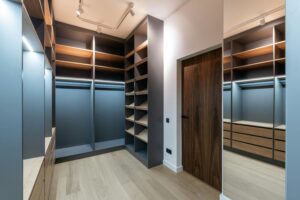

Custom Mud Room Solutions
OUR MUD ROOM GALLERY
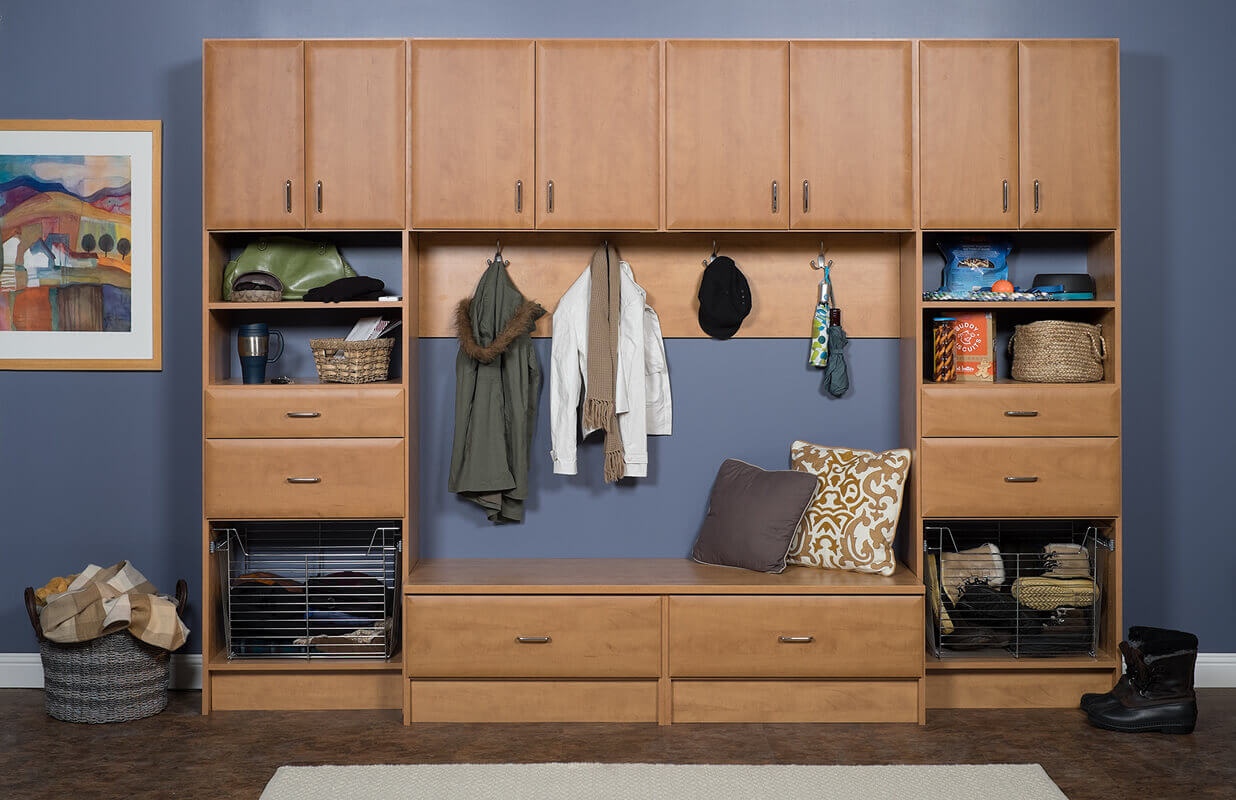
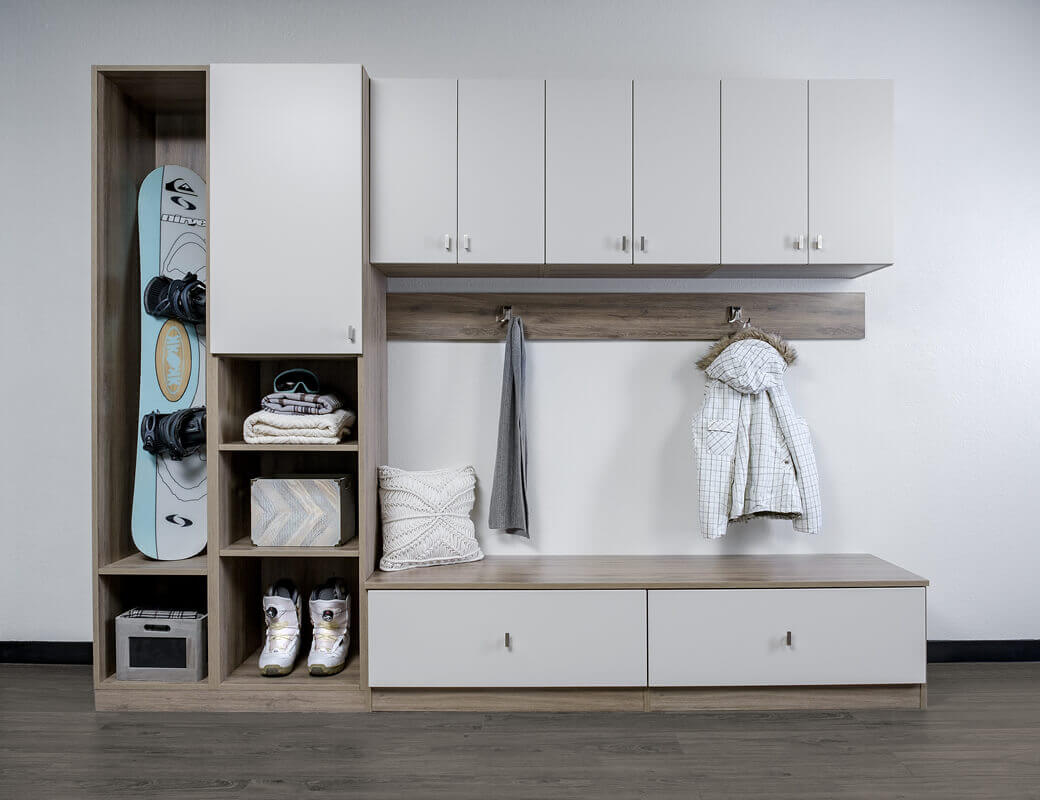
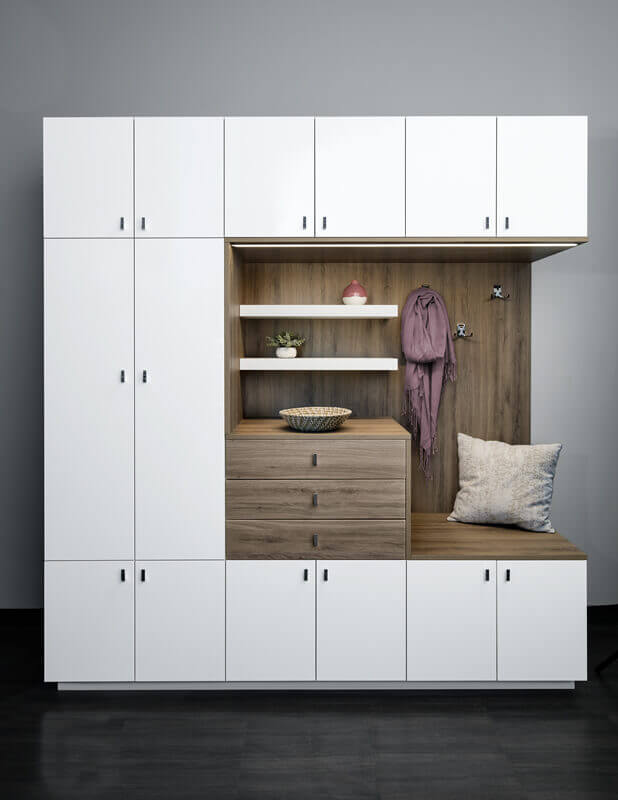
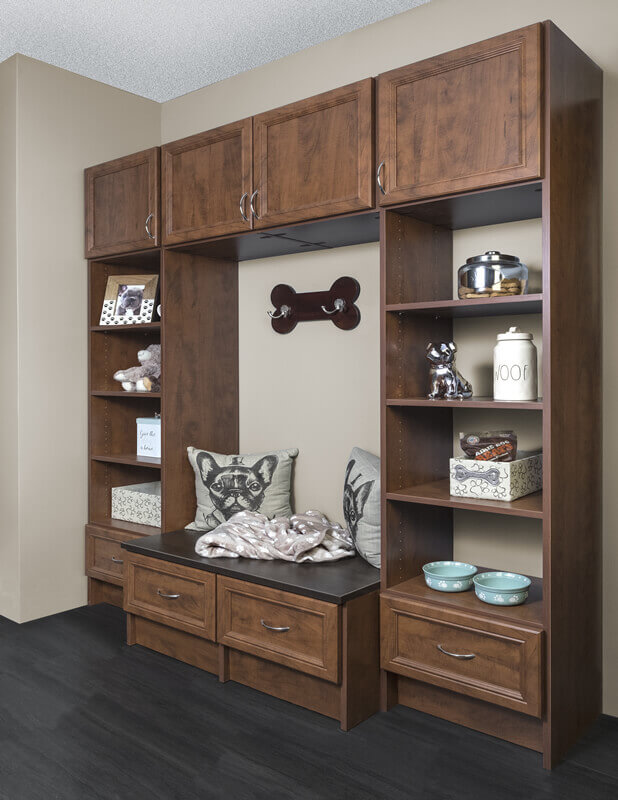
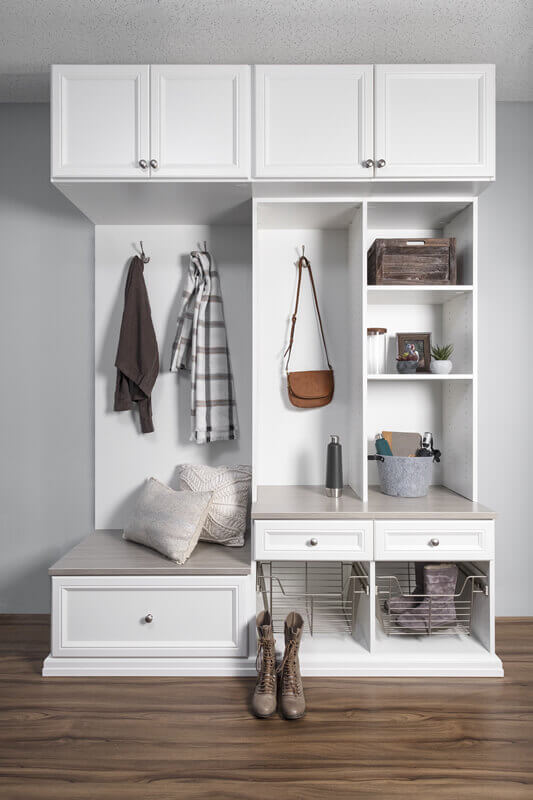
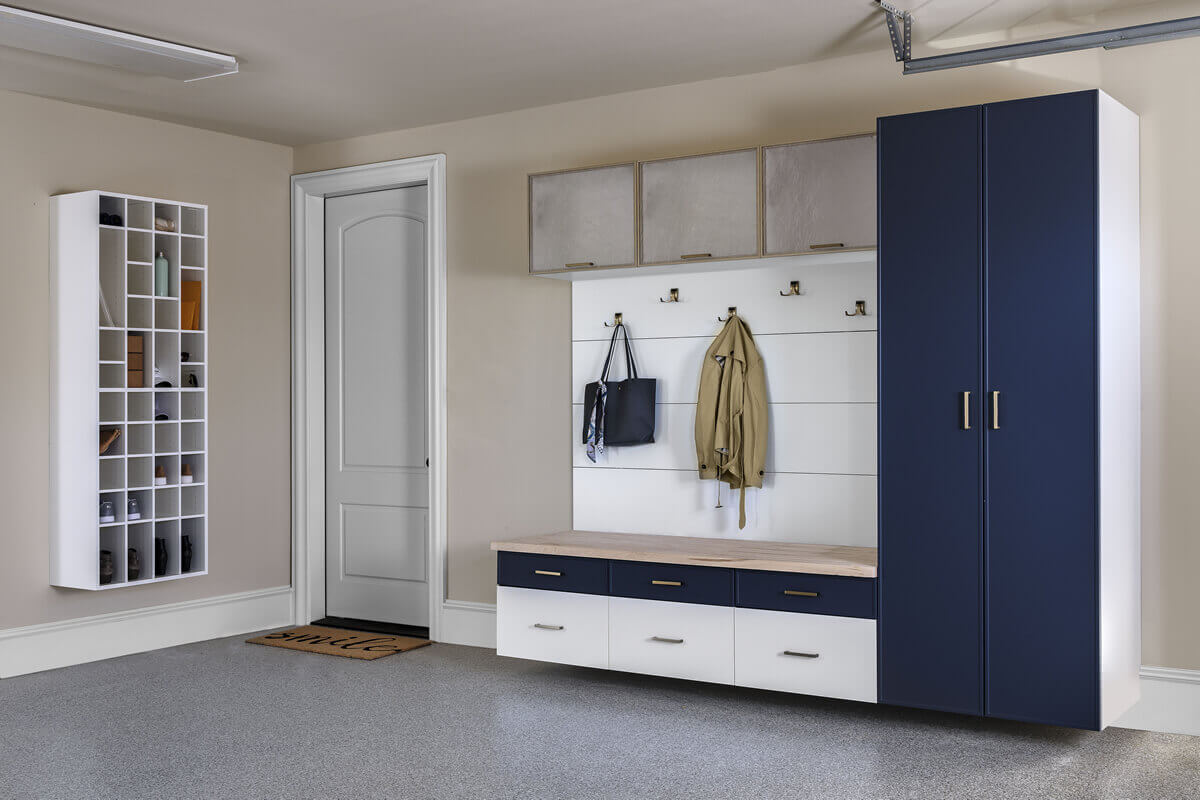
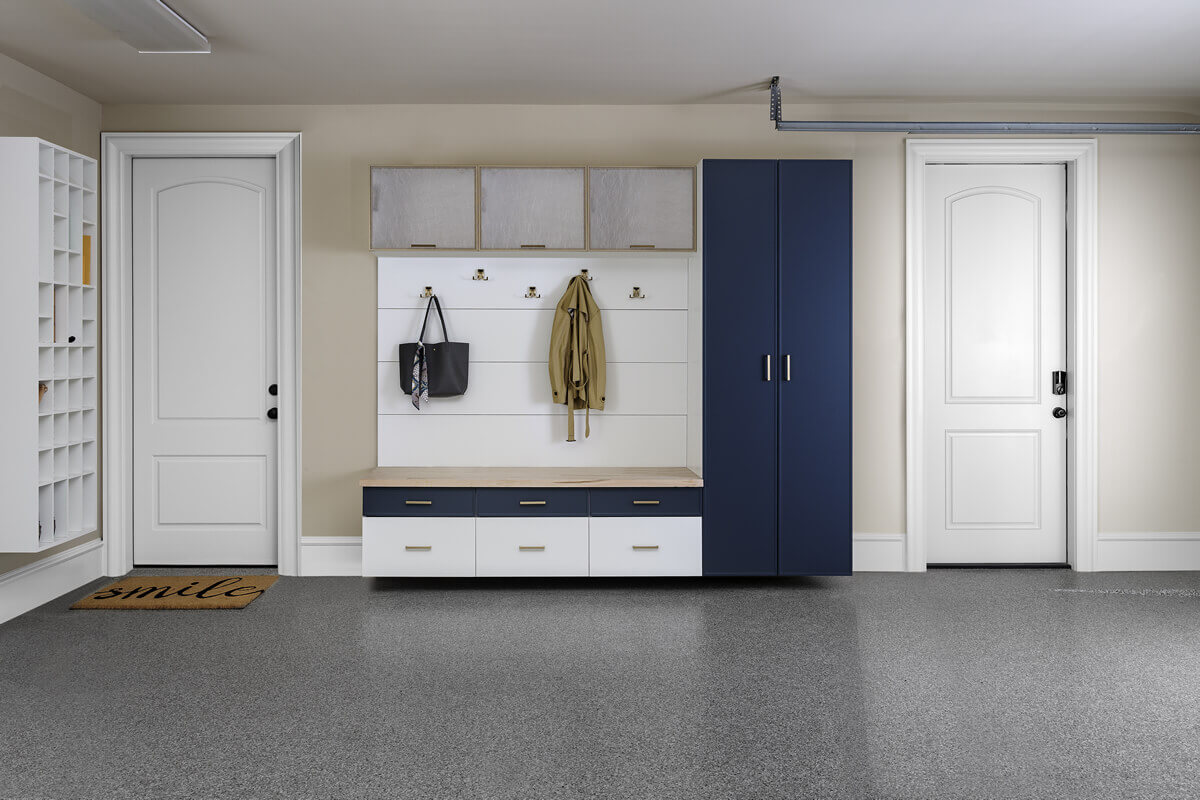
Your entryway sets the tone for everything that follows.
For Atlanta homeowners in Virginia-Highland, Historic Brookhaven, and Chastain Park, a chaotic mudroom isn’t just an eyesore — it’s the first thing you see in the morning and the last thing you deal with at night. The Closet Shop Atlanta designs and installs custom mudroom systems built to match your home’s architecture, engineered to handle the demands of real Atlanta family life, and completed with white-glove care in as little as one day. The Closet Shop Atlanta’s full range of Atlanta home organization services is focused specifically on custom mudroom design and installation.
ATLANTA ENTRYWAYS HAVE A SPECIFIC PROBLEM — AND A SPECIFIC SOLUTION
Atlanta’s older housing stock creates mudroom challenges that off-the-shelf furniture simply cannot solve. Homes throughout Virginia-Highland, Historic Brookhaven, and Ansley Park were built in eras when entryways weren’t designed for the daily assault of backpacks, cleats, and rain-soaked outerwear. Floors settle. Walls drift out of plumb. Doorways narrow. A flat-pack locker unit from a big-box retailer leaves visible gaps, rocks on uneven surfaces, and pulls away from the wall within a season of heavy use.
Georgia’s humidity compounds the problem at the material level. The same moisture that rolls in off the Atlanta BeltLine greenway during summer storms — and the condensation that builds up near garage entries in Chastain Park homes — causes untreated wood substrates to swell, warp, and delaminate within a few years. The result is a mudroom that looks worse than what you started with.
The Closet Shop Atlanta addresses both realities simultaneously: our custom-built-ins are scribed to your specific floors and walls so there are no gaps, and every substrate we use is selected for moisture resistance in Georgia’s climate.
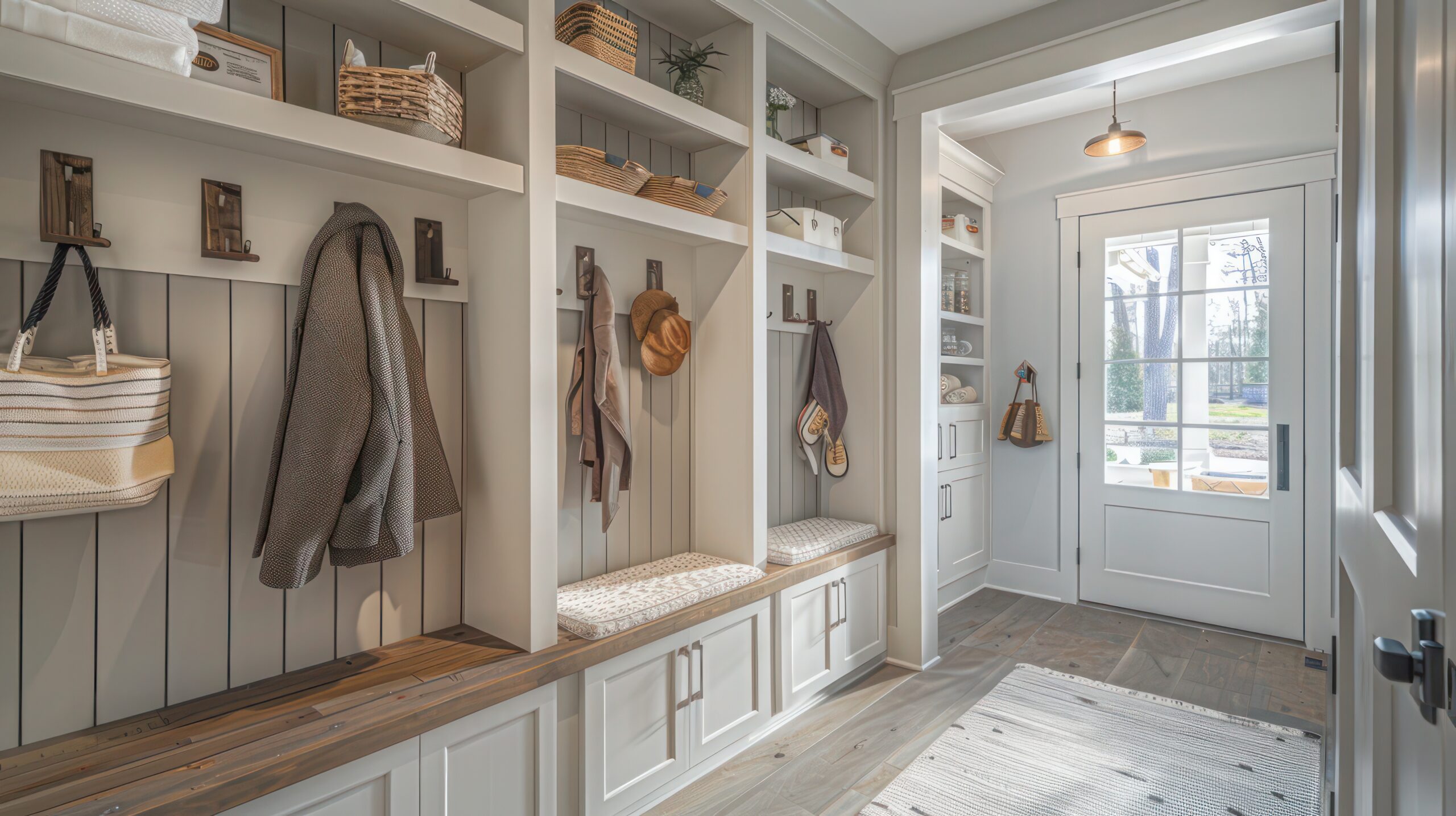
OUR ATLANTA MUDROOM SERVICES ARE DESIGNED FOR THIS CITY’S HOMES:
A PROJECT NEAR HISTORIC BROOKHAVEN — WHAT THE WORK ACTUALLY LOOKS LIKE
Custom mudroom work in Atlanta’s older neighborhoods requires a level of site-specific craftsmanship that prefabricated systems cannot replicate.
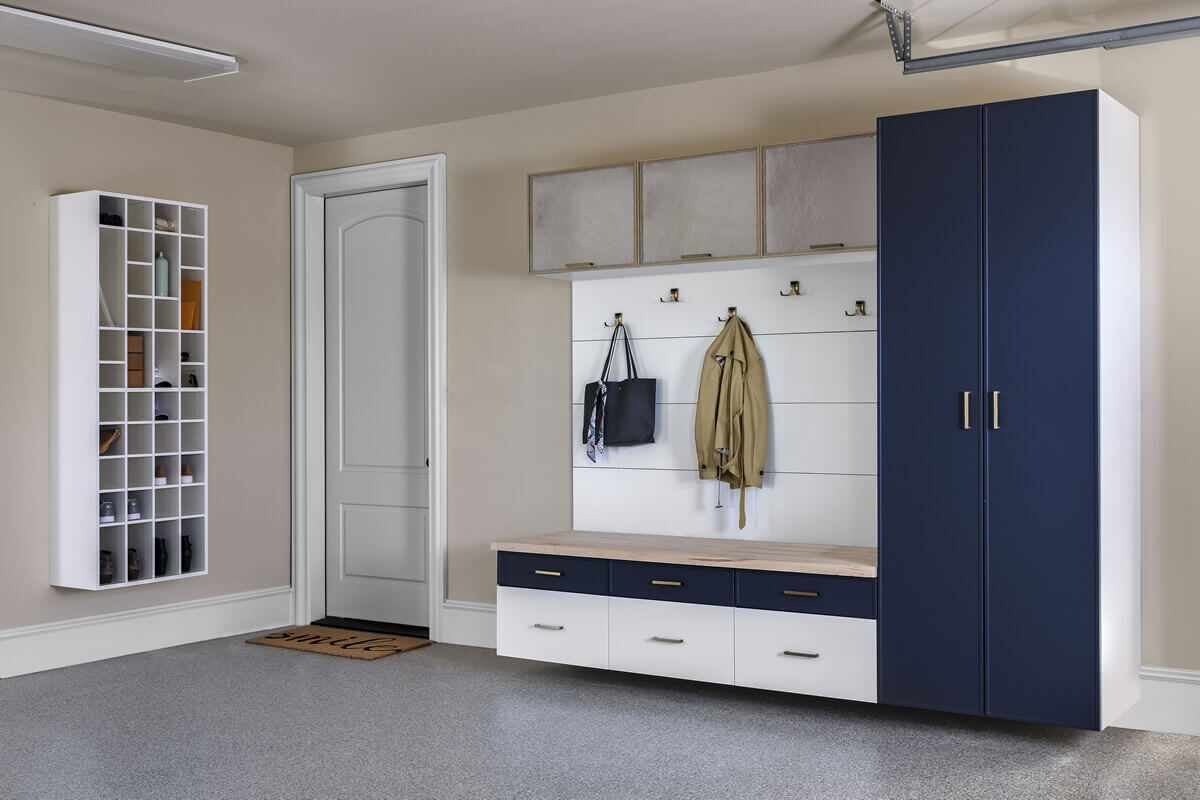
A recent installation in a 1940s-era home near Historic Brookhaven illustrates the process clearly. The homeowner’s garage entryway — the primary path for two school-aged children — had roughly 11 feet of linear wall space, but the floor had settled nearly three-quarters of an inch across that run. A standard locker unit would have sat visibly unlevel, leaving a gap at one end large enough to trap shoes and debris.
Our team scribed the base of the cabinetry to the floor’s exact contour during fabrication, so the finished installation sits flush from wall to wall with no visible gap. The substrate — thermally fused laminate on a marine-grade plywood core — was selected specifically because the garage entry in this home had no climate control and experienced significant humidity variation between Atlanta’s summers and winters. The homeowner reported zero movement, swelling, or finish degradation after the first full year. The entire installation, from delivery to final cleanup, was completed in one day.
HOW WE BUILD YOUR ATLANTA CUSTOM MUD ROOM
Step 1 — Design Consultation at Your Atlanta Home
Every project begins with a design consultation at your home — not a showroom appointment, not a video call. We measure the actual walls and floors of your entryway, document the degree of out-of-plumb and any floor settlement, and note the existing trim profiles so we can match crown molding and baseboards exactly. For homes near the BeltLine or in Virginia-Highland where Craftsman-era millwork is a defining architectural feature, this matching process is what separates a built-in that looks original to the home from one that looks like it was carried in from a warehouse.
Step 2 — Off-Site Fabrication with Atlanta-Specific Material Selection
Your cabinetry is fabricated off-site using substrates selected for Georgia’s climate. We use thermally fused laminate (TFL) panels and marine-grade plywood cores as standard — not particleboard, which absorbs moisture and fails in Atlanta’s humid summers. Hardware is load-rated for the actual weight demands of a family mudroom: heavy-duty European hinges, cleat systems anchored into wall studs, and bench frames built to support adult body weight without flex. Pre-fabrication means your installation day is a single, contained event — not a multi-day construction project in your home.
Step 3 — White-Glove Installation and Final Scribing
On installation day, our team arrives with your cabinetry fully assembled and ready to set. The final scribing — fitting the base and side panels to your specific floor contour and wall angle — happens on-site with precision tools. We anchor every unit into wall studs, not just drywall. When we leave, the site is cleaner than we found it. The finished system looks as though it was designed into the home’s original architecture, because it was designed for this specific home, not adapted from a catalog.
WHAT ATLANTA’S BUILDING REQUIREMENTS MEAN FOR YOUR MUDROOM PROJECT
Custom mudroom cabinetry installed in Atlanta residential homes is governed by the City of Atlanta’s Office of Buildings under the Atlanta Construction Codes.
In practical terms, freestanding cabinetry and millwork that is anchored to wall studs in a residential setting typically falls under the scope of interior finish work. For projects in unincorporated Fulton County or DeKalb County — which covers portions of Historic Brookhaven and areas near the BeltLine — permit requirements may differ. We recommend confirming the applicable jurisdiction for your specific address before installation begins.
The Closet Shop Atlanta’s installation team handles all site-specific anchoring in compliance with applicable residential building standards.
Atlanta and the surrounding neighborhoods we serve:
THE STRUCTURAL DIFFERENCE BETWEEN REAL CUSTOM BUILT-INS AND BIG-BOX FURNITURE
Most Atlanta homeowners who regret their mudroom decision regret it within the first school year. The hooks sag. The bench top develops a visible bow. The locker doors begin to rattle because the cabinet box itself has shifted on an uneven floor. These are not cosmetic failures — they are structural failures that trace back to the original material and mounting decisions.
The distinction that matters is the substrate and anchor method. A flat-pack locker unit uses a particleboard or MDF core that responds to humidity by expanding and contracting. In an Atlanta garage entryway — where temperature and humidity swing dramatically between a July afternoon and a January morning — that movement is constant and cumulative. Over two or three years, the joints open, the doors no longer close cleanly, and the finish begins to bubble.
Our custom-built-ins use thermally fused laminate on a marine-grade plywood core. TFL is a factory-fused, resin-impregnated surface that does not absorb moisture the way raw wood or painted MDF does. Marine-grade plywood maintains its dimensional stability across humidity ranges that would cause standard particleboard to fail. The hooks are mounted on a cleat system anchored directly into wall studs — not toggle bolts into drywall — so the dynamic load of a loaded backpack is transferred into the structural framing of the wall, not the surface material.
That is what “custom” means in a mudroom context. Not just a choice of finish color. A choice of engineering.
CONCEALED VS. OPEN STORAGE — DESIGNING FOR YOUR ATLANTA HOUSEHOLD
The right mudroom configuration depends on how your household actually moves through the space, not on what photographs well.
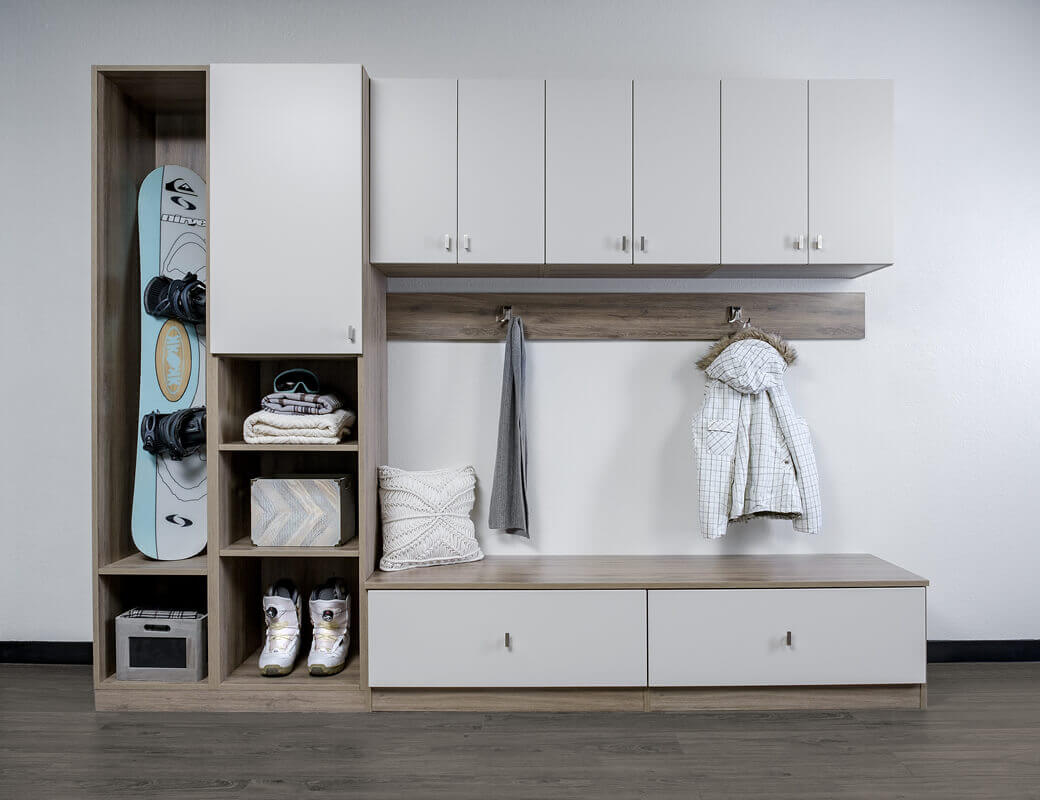
Open cubbies work for households where visual accountability matters — where children need to see their backpack to remember it exists. Concealed storage behind solid or glass-front doors works for households where visual calm is the priority and the adults using the space are self-managing. Most Atlanta families we work with end up with a hybrid: open cubbies at child height for daily-use items, closed cabinetry above for seasonal gear, and a full-width bench with concealed storage beneath for shoes.
The bench depth question comes up in nearly every consultation. A fully functional mudroom bench with closed storage beneath requires a minimum of 16 inches of depth to accommodate a standard shoe drawer or pull-out tray. At 20 to 22 inches, you gain the ability to use a full-depth drawer box, which increases storage volume significantly. In the narrower entryways common to Atlanta’s Craftsman bungalows — where a hallway may be only 36 to 42 inches wide — we design the bench depth to preserve clearance for the door swing and traffic flow, which sometimes means a shallower profile with vertical locker storage above rather than a deep bench.
Every configuration decision is made in the context of your specific space. That is what the design consultation is for.
MATCHING EXISTING TRIM IN ATLANTA’S OLDER HOMES
Seamless architectural integration — the quality that makes a custom built-in look as though it was always there — requires more than choosing the right paint color.
Atlanta’s Virginia-Highland, Ansley Park, and Morningside neighborhoods are defined by homes built between the 1910s and 1940s. These homes have trim profiles — base moldings, door casings, crown profiles — that were milled to specifications that no longer exist as standard stock. A mudroom installation that terminates abruptly at a baseboard that doesn’t match, or that leaves a gap between the cabinet top and an existing crown, announces itself as an addition rather than an original feature.
Our process includes profile-matching the existing trim before fabrication begins. In most Atlanta installations, this means bringing a sample of the existing baseboard and crown back to our shop so the transition pieces can be milled or sourced to match. The result is a mudroom that a visitor to your home would assume was part of the original construction, which, in a home in Historic Brookhaven or Ansley Park, is the highest possible compliment.
If your project also involves the adjacent garage or a laundry room entry, our custom garage storage systems for Atlanta homes are designed to connect seamlessly with a mudroom installation as part of the same project scope.
YOUR MUD ROOM APPEARANCE WILL NEVER BE THE SAME
FREQUENTLY ASKED QUESTIONS — CUSTOM MUD ROOM ATLANTA
How do you install custom mudroom lockers on an uneven floor in an Atlanta home without leaving a visible gap?
The scribing process is the answer. Before fabrication is complete, we document the exact floor contour across the full run of cabinetry — in Atlanta’s older Virginia-Highland and Historic Brookhaven homes, floor settlement of a half-inch or more across a 10-foot run is not unusual. The base panel of each cabinet unit is then cut to follow that contour precisely, so the finished installation sits flush to the floor at every point. This is done with precision scribing tools and is a fundamentally different process from shimming a flat-pack unit and hoping the gap is small enough to ignore.
What materials does The Closet Shop Atlanta use to prevent mudroom warping in Georgia’s humidity?
Georgia’s climate — humid summers, condensation-prone garage entries, and wet outerwear landing on shelves daily — demands a specific material approach. We use thermally fused laminate (TFL) panels bonded to a marine-grade plywood core as our standard substrate. TFL is a factory-fused, resin-sealed surface that does not absorb moisture the way painted MDF or raw wood does. Marine-grade plywood maintains its dimensional stability across the humidity swings that Atlanta experiences between July and January. This combination prevents the swelling, delamination, and joint failure that cause flat-pack mudroom furniture to fail within a few years in this climate.
What structural reinforcements ensure mudroom hooks can hold heavy backpacks without pulling from the wall?
The failure mode for most mudroom hooks is not the hook itself — it’s the mounting method. Hooks screwed into drywall, even with anchors, are subject to the dynamic load of a heavy backpack being dropped rather than placed, which over time works the fastener loose. Our hook systems are mounted on a continuous cleat anchored directly into wall studs at 16-inch centers. The cleat transfers the load into the structural framing of the wall, not the drywall surface. For Atlanta homes with older framing — particularly in Craftsman-era bungalows where stud spacing may be irregular — we locate every stud before installation begins and adjust our cleat anchor points accordingly.
What is the minimum depth for a mudroom bench with closed storage beneath in a narrow Atlanta entryway?
A fully functional mudroom bench with a shoe drawer or pull-out tray beneath requires a minimum of 16 inches of depth. At 20 to 22 inches, a full-depth drawer box becomes possible, which meaningfully increases storage volume. In Atlanta’s narrower Craftsman bungalow entryways — where hallway width may be 36 to 42 inches — we often design a shallower bench profile paired with taller locker storage above to maximize vertical capacity without sacrificing traffic clearance. The specific configuration is determined during the design consultation based on your actual floor plan.
Can a custom mudroom be integrated into an existing laundry room or garage entry in an Atlanta home without moving plumbing?
In most cases, yes — provided the plumbing is located on a wall that is not part of the mudroom cabinetry run. The design consultation includes a review of the plumbing locations so we can configure the layout to work around existing supply and drain lines. For Atlanta homes where the garage entry and laundry room share a wall, we frequently design a system where the mudroom cabinetry terminates before the plumbing wall and transitions to a separate laundry storage configuration. The two systems can share a continuous visual language — matching door profiles, hardware, and finishes — without requiring any plumbing relocation.
Is a custom mudroom installation covered under The Closet Shop Atlanta’s standard lifetime guarantee?
Every custom mudroom system installed by The Closet Shop Atlanta is backed by our lifetime guarantee. This covers the structural integrity of the cabinetry, the hardware, and the installation — meaning that if a shelf sags, a hinge fails, or a cleat pulls from the wall under normal use conditions, we return and correct it at no charge. The lifetime guarantee is one of the reasons Atlanta homeowners in Buckhead and Sandy Springs choose a custom installation over a prefabricated system: the long-term cost of a system that holds is lower than the cost of replacing one that doesn’t.